Virtual Staging Software Reddit Reviews: What Agents and Photographers Say
A transparent analysis of Reddit discussions about virtual staging software, covering room accuracy, realism, consistency, pricing, review, and disclosure.
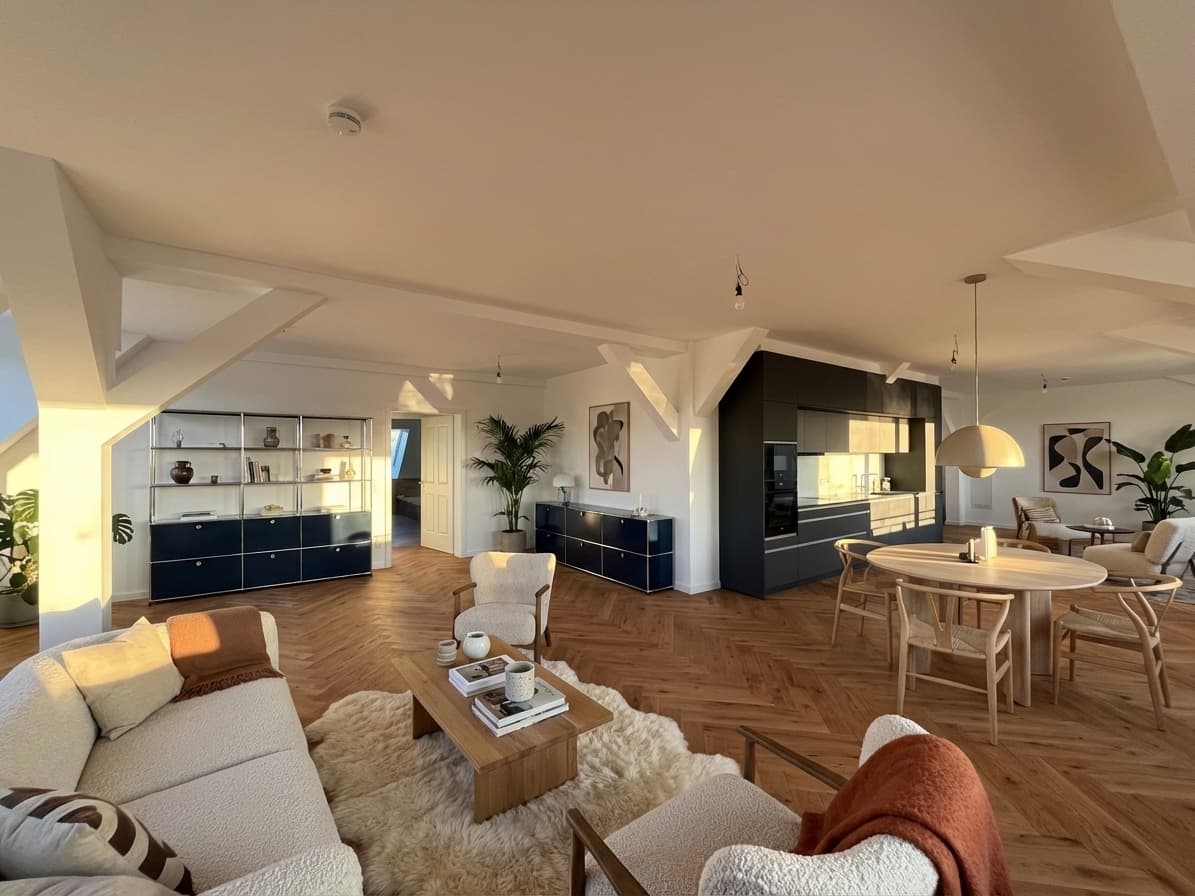
People add “Reddit” to software searches because they want the questions, objections, and rough edges that polished product pages often skip. Virtual staging is a particularly good example: a staged room can look attractive at first glance while still changing the property, using implausible furniture scale, or creating more review work than expected.
We reviewed ten English-language Reddit discussions about AI and virtual staging software. The goal was not to declare a winner or turn anonymous comments into a product ranking. It was to identify recurring concerns that an agent, photographer, or listing team can test before choosing a workflow.
Quick Answer
The Reddit discussions we reviewed do not produce a reliable “best virtual staging software” verdict. They do produce a useful buying checklist.
Across threads, participants repeatedly returned to six questions:
- Does the staged image preserve walls, windows, floors, fixtures, and room proportions?
- Does the furniture look grounded and correctly scaled?
- Can the tool stay consistent across several photos from one listing?
- How much prompting, masking, regeneration, or manual correction is required?
- Is the quoted price for a generation or for an image someone would actually publish?
- Can the final image move through disclosure and listing review without weakening buyer trust?
Those are stronger evaluation criteria than counting styles or comparing a vendor's best gallery images. If you are testing software now, start with one real room and judge the complete path to an approved image.
How We Reviewed the Reddit Discussions
This is a qualitative review, not a survey.
We reviewed ten discussions that were publicly visible on July 1, 2026. They were posted between April 2024 and June 2026 in r/RealEstatePhotography, r/RealEstateTechnology, r/RealEstateAdvice, and r/realtors. We selected threads that contained substantive discussion of output quality, workflow, pricing, professional delivery, or buyer reaction.
The source set included:
- Virtual Home Staging with AI, where commenters discussed obvious AI appearance and consistency across images.
- Built an AI Virtual Staging Tool for Agents, which drew feedback about furniture proportions, room scale, and trust.
- DIY AI Virtual Staging, a discussion of catalog control, manual placement, and workflow complexity.
- How Much Are You Charging for Virtual Staging?, which focused on pricing, revisions, service packaging, and MLS review.
- Virtual Staging with AI, where room preservation and prompt reliability were central concerns.
- Rate per Photo for Virtual Staging?, which compared DIY generation costs with professional service pricing.
- Do You Still View Virtual Staging and AI Virtual Staging as Different?, a discussion of where generated staging differs from more controlled production.
- Do Buyers Actually Care About AI in Listings?, which surfaced conflicting buyer and agent views about usefulness, accuracy, and disclosure.
- Staging Costs, where participants discussed physical staging cost alongside concerns about AI scale and original-image context.
- Feedback for Some AI Virtual Staging, which included detailed critiques of permanent fixtures, revisions, regeneration, and final-image responsibility.
Reddit users are self-selecting, identities and experience levels are difficult to verify, and comments may be edited or deleted. Several threads also contain vendor promotion. We treated individual prices, performance claims, and legal statements as anecdotes rather than established facts.
Planua publishes this analysis and sells virtual staging software. We are not affiliated with Reddit, and this page should not be read as an independent endorsement of Planua or as evidence that Reddit users recommend it.
Theme 1: The Room Has to Remain the Same Room
The strongest recurring concern was not furniture style. It was property accuracy.
Participants described AI outputs that changed floors, windows, lighting, fixtures, room dimensions, or the apparent scale of the space. Several comments made the same practical point from different angles: staging stops being helpful when the image implies that furniture fits where it would not fit in the actual room.
This creates a clear software test:
- Open the source photo and staged result side by side.
- Compare wall, ceiling, and floor boundaries.
- Check every window, door, radiator, outlet, built-in, and permanent light.
- Look at furniture scale relative to known room features.
- Reject the image if the property itself appears to have changed.
For a more detailed source-photo process, use the virtual staging workflow for real estate photos.
Theme 2: Realism Includes Scale, Contact, and Restraint
Reddit critiques frequently focused on details that make an otherwise polished image feel wrong:
- furniture that appears too large or too small;
- objects that float or fail to make believable contact with the floor;
- shadows and reflections that do not match the room;
- crowded layouts that reduce usable space;
- generated fixtures or decor that imply permanent changes.
These are not merely aesthetic defects. They affect how a buyer interprets room function and size.
A useful evaluation should therefore score realism in parts rather than asking whether the image “looks good.” Check scale, perspective, contact, lighting, material boundaries, and whether the furnishing density fits the room.
Theme 3: One Good Image Does Not Prove Listing Consistency
Several discussions distinguished between a convincing single result and a workflow that can handle multiple views or rooms.
This matters because listings are viewed as sets. If furniture direction, color, proportions, or quality changes sharply from image to image, the collection can feel less credible even when each output is acceptable in isolation.
Test at least three related source photos:
- two views of the same room when available;
- or three rooms from the same property.
Then check whether the staged set shares a believable design direction and quality level. Software intended for repeated listing work should make consistency review manageable rather than leaving each image as an unrelated generation.
Theme 4: Speed Can Move Work Into Review
AI staging is often discussed as a faster alternative to manual production. Reddit discussions also reveal the other side of that tradeoff: prompting, masking, regenerating, and correcting outputs can transfer work from creation into review.
Measure the entire workflow:
- source-photo preparation;
- room and style direction;
- generation attempts;
- structural comparison;
- corrections or regeneration;
- internal or client approval;
- export, labeling, and delivery.
A fast first render is valuable. It is not the same as a fast approved image.
This is also why prompt complexity matters. A workflow that depends on one specialist remembering a long set of instructions may be difficult to roll out across an agency or photography team.
Theme 5: Price Per Generation Is Not Price Per Approved Image
The pricing discussions contained a wide range of anecdotal rates for AI tools, outsourced editors, and photographer-delivered services. Those figures are difficult to compare because the deliverables differ.
An AI generation may exclude:
- retries;
- manual corrections;
- client communication;
- source-versus-output review;
- disclosure handling;
- high-resolution delivery;
- responsibility for the final image.
Instead of relying on a price mentioned in a thread, calculate:
total software and labor cost ÷ approved, publishable images
That makes a subscription, credit bundle, per-image vendor, and photographer service easier to compare on the same operational basis. The virtual staging cost guide explains the main pricing models without assuming one universal market rate.
Theme 6: Buyers React to Accuracy More Than the AI Label
The buyer-focused discussion was divided. Some commenters found virtual staging useful when it clarified an empty room. Others disliked images that exaggerated space, changed finishes, or created a mismatch at the showing.
That disagreement supports a more useful conclusion than “buyers like” or “buyers hate” AI staging:
- preserve the real property;
- keep the original photo available;
- do not use generated furniture to imply impossible scale;
- label or disclose staged images according to the relevant brokerage, portal, MLS, and local requirements;
- review the complete listing experience, not only the hero image.
Requirements vary by market and platform. Reddit comments are not legal guidance. Use the MLS virtual staging rules guide as a starting point, then confirm the rules that apply to the specific listing.
A One-Photo Software Pilot Based on the Reddit Concerns
Use one representative photo before committing a portfolio or team.
Step 1: Choose a real candidate
Select an empty living room or bedroom your team could genuinely publish. Avoid a perfect vendor sample or an image so poor that it should be reshot.
Step 2: Save the review standard first
List the permanent features that must remain unchanged and define the likely buyer, room purpose, furniture density, and style direction.
Step 3: Generate without special treatment
Use the workflow a normal team member would use. Record the time, instructions, generations, and corrections needed.
Step 4: Compare at full size
Inspect architecture, permanent fixtures, scale, contact points, shadows, reflections, and image artifacts against the source.
Step 5: Ask another reviewer
Have someone who did not create the image compare it with the original. They should be able to identify any structural or trust concern without being coached.
Step 6: Calculate the approved-image cost
Include generation charges and the time spent directing, checking, correcting, approving, and delivering the image.
Step 7: Test the publication workflow
Confirm file naming, original-image retention, disclosure placement, and the person responsible for final approval.
Virtual Staging Software Evaluation Checklist
| Criterion | Pass condition |
|---|---|
| Structural fidelity | Permanent property features match the source photo |
| Furniture scale | Objects appear plausible for the actual room |
| Visual realism | Contact, perspective, lighting, and materials hold up at full size |
| Repeatability | Related listing photos maintain a coherent quality and direction |
| Review burden | A normal team member can reach approval without specialist prompting |
| Cost clarity | The team can calculate cost per approved image |
| Trust workflow | Originals, disclosure, and approval responsibility are defined |
Do not score a tool from its public gallery alone. Run the same source photo and review standard through every option on the shortlist.
Where Planua Fits
Planua is designed for virtual staging from real listing photos, with a workflow centered on room preservation, buyer-fit direction, review, and repeatable use.
That does not remove the need to inspect every output. Generative image tools can produce imperfect results, and the listing team remains responsible for deciding what is accurate and publishable.
Planua is worth testing when you want to:
- begin with one actual empty-room photo;
- guide staging around the property and likely buyer;
- compare the output against the original;
- refine the result before approval;
- and move from a one-room test toward a repeatable listing workflow.
Final Takeaway
The useful lesson from virtual staging software Reddit reviews is not a crowdsourced winner. It is a sharper test.
Preserve the room. Check scale and realism. Test more than one image. Count review work. Compare approved-image cost. Keep disclosure and buyer expectations inside the workflow.
Test Planua on a real listing photo and evaluate the result against the checklist above before you scale it across a listing or team.
Try It On A Real Listing
Ready to turn empty room photos into listing-ready interiors?
Use this topic on a real listing and see how Planua fits your virtual staging workflow.
Keep Reading
Related virtual staging guides
best virtual staging software for real estate
Best Virtual Staging Software for Real Estate Teams
A practical buying guide for real estate agencies comparing virtual staging software across output quality, workflow fit, bulk staging, pricing, and review.
how to choose virtual staging software
How to Choose Virtual Staging Software for a Real Estate Team
A practical guide to choosing virtual staging software for a real estate team, with evaluation criteria around output quality, workflow fit, volume, and compliance review.
virtual staging vs traditional staging
Virtual Staging vs Traditional Staging: When Each Makes Sense
Compare virtual staging and traditional staging across speed, cost, buyer clarity, and operational fit for real estate teams.