Virtual Staging vs Traditional Staging: When Each Makes Sense
Compare virtual staging and traditional staging across speed, cost, buyer clarity, and operational fit for real estate teams.
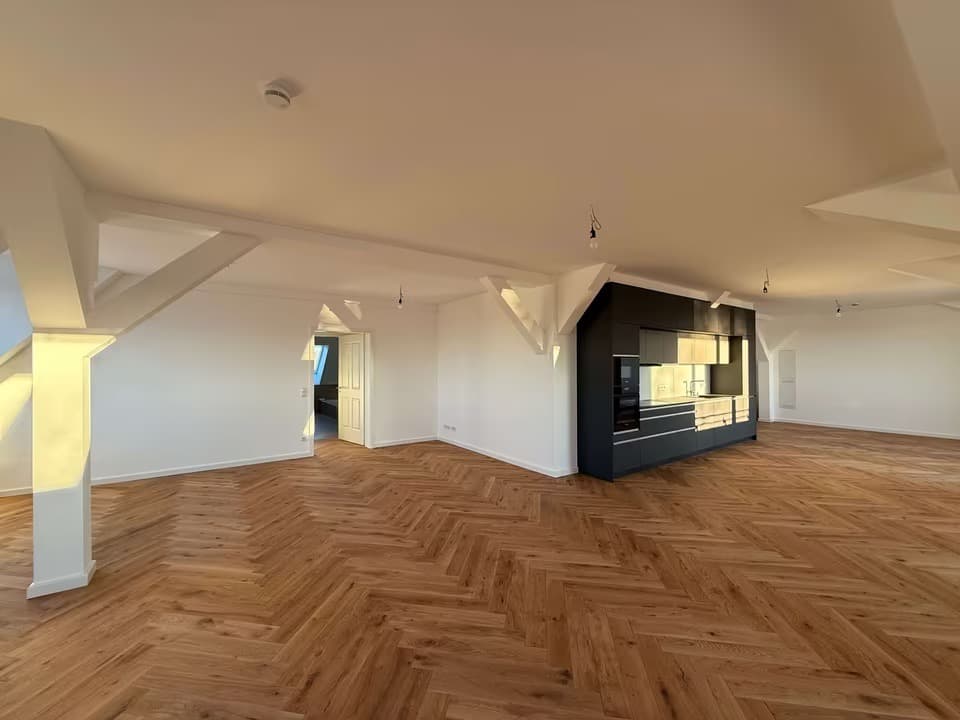
Virtual staging and traditional staging are often framed as direct substitutes, but in practice they solve slightly different problems.
Traditional staging changes the physical property. Virtual staging changes how the property is understood online.
That difference matters because many real estate teams are not trying to replace every in-person marketing tactic. They are trying to make empty listings easier to understand before the showing ever happens.
Quick Answer
Choose traditional staging when the physical in-person experience needs to change.
Choose virtual staging when the main problem is that empty listing photos are underperforming online.
For many agencies, virtual staging becomes the scalable default and traditional staging stays reserved for selected premium situations.
In This Comparison
- Where traditional staging is still stronger
- Where virtual staging wins on speed and flexibility
- How to think about cost and operational fit
- A better way to decide between them
Where Traditional Staging Wins
Traditional staging is strongest when:
- The property will host in-person viewings frequently
- A premium sale justifies higher preparation cost
- Physical atmosphere is part of the sales strategy
- The team wants the property to feel fully furnished in person
If the property experience itself needs to change, physical staging still has a real role.
Where Virtual Staging Wins
Virtual staging is strongest when the listing needs to work harder before the viewing.
Virtual staging is strongest when:
- Empty photos are underperforming online
- Teams need faster turnaround
- Multiple rooms or listings need attention
- The goal is buyer clarity before the visit
- The budget does not support physical staging on every listing
In these situations, the problem is not "the room is physically empty." The problem is "the listing does not communicate what the room could become."
Speed and Operational Fit
This is often the deciding factor for real estate teams.
Traditional staging involves scheduling, furniture logistics, installation, removal, and coordination with the listing timeline. Virtual staging usually starts from photos already available in the marketing workflow.
That means virtual staging is often easier to test, easier to repeat, and easier to scale across multiple properties or vacancies.
Cost Comparison
The cost conversation is really a workflow conversation.
Traditional staging can make sense for selected high-value properties, but it is rarely a scalable default for every empty listing in a pipeline.
Virtual staging typically offers:
- Lower initial commitment
- Faster experimentation
- Better fit for repeated listing volume
- Easier adaptation across multiple rooms
The best teams do not always choose one forever. They choose the one that fits the listing and the sales context.
A Better Framing for the Decision
Ask the question in operational terms, not abstract marketing terms.
Instead of asking which method is universally better, ask:
- Do we need the property to feel furnished in person, or mainly online?
- How quickly do we need staged visuals?
- Are we staging one premium listing or many empty rooms over time?
- Is the real bottleneck buyer understanding or physical presentation?
For many agencies, virtual staging is not the replacement for every premium listing tactic. It is the operational default for improving empty-room marketing without slowing down the team.
A Practical Rule of Thumb
- If the room must feel better during physical viewings, traditional staging is still the stronger tool.
- If the listing needs faster, clearer online presentation, virtual staging is usually the better first move.
- If you are handling repeated empty listings, virtual staging is generally the more scalable option.
If that sounds closer to your situation, see how Planua fits agency virtual staging workflows and compare the plans here.
Try It On A Real Listing
Ready to turn empty room photos into listing-ready interiors?
Use this topic on a real listing and see how Planua fits your virtual staging workflow.
Keep Reading
Related virtual staging guides
virtual staging ROI for real estate listings
Virtual Staging ROI: A Practical Framework for Real Estate Teams
Measure virtual staging ROI using approved-image cost, review labor, time to publish, utilization, and retry burden instead of speculative listing outcomes.
virtual staging for realtors
Virtual Staging for Realtors: A Practical Listing Workflow
A practical guide to virtual staging for realtors who need clearer empty listing photos, faster buyer understanding, and a workflow they can test for free.
virtual staging for real estate agencies
A Virtual Staging Playbook for Real Estate Agencies
How agencies can use virtual staging as a repeatable listing workflow instead of a one-off creative experiment.